Where Generations Meet: Why Indoor Amusement Bridges Age Gaps
In every household, time moves in layers. The elders sit with stories weathered by decades, their voices carrying the fragrance of memory; the parents stand at the centre, balancing duty and devotion; and the children, luminous with impatience, lean toward horizons yet unseen. Each generation inhabits its own patterns, its own vocabulary of living. However, from time to time, there arise certain experiences so elemental, so untouched by the erosion of years, that they dissolve these carefully drawn boundaries and return everyone to a shared, uncomplicated joy. Play is one such experience.
A bowling lane, polished and patient beneath steady lights, does not recognise the arithmetic of age. It receives the measured stride of a grandfather and the spirited dash of a child with equal grace. When an elder bends slightly to demonstrate the angle of a throw, and a young hand mirrors the gesture with eager concentration, there is more than instruction unfolding; there is inheritance in motion. The strike or the near miss matters little. What lingers is the applause, generous and wholehearted, offered not merely for success but for participation. In that echoing sound, dignity and delight stand side by side.
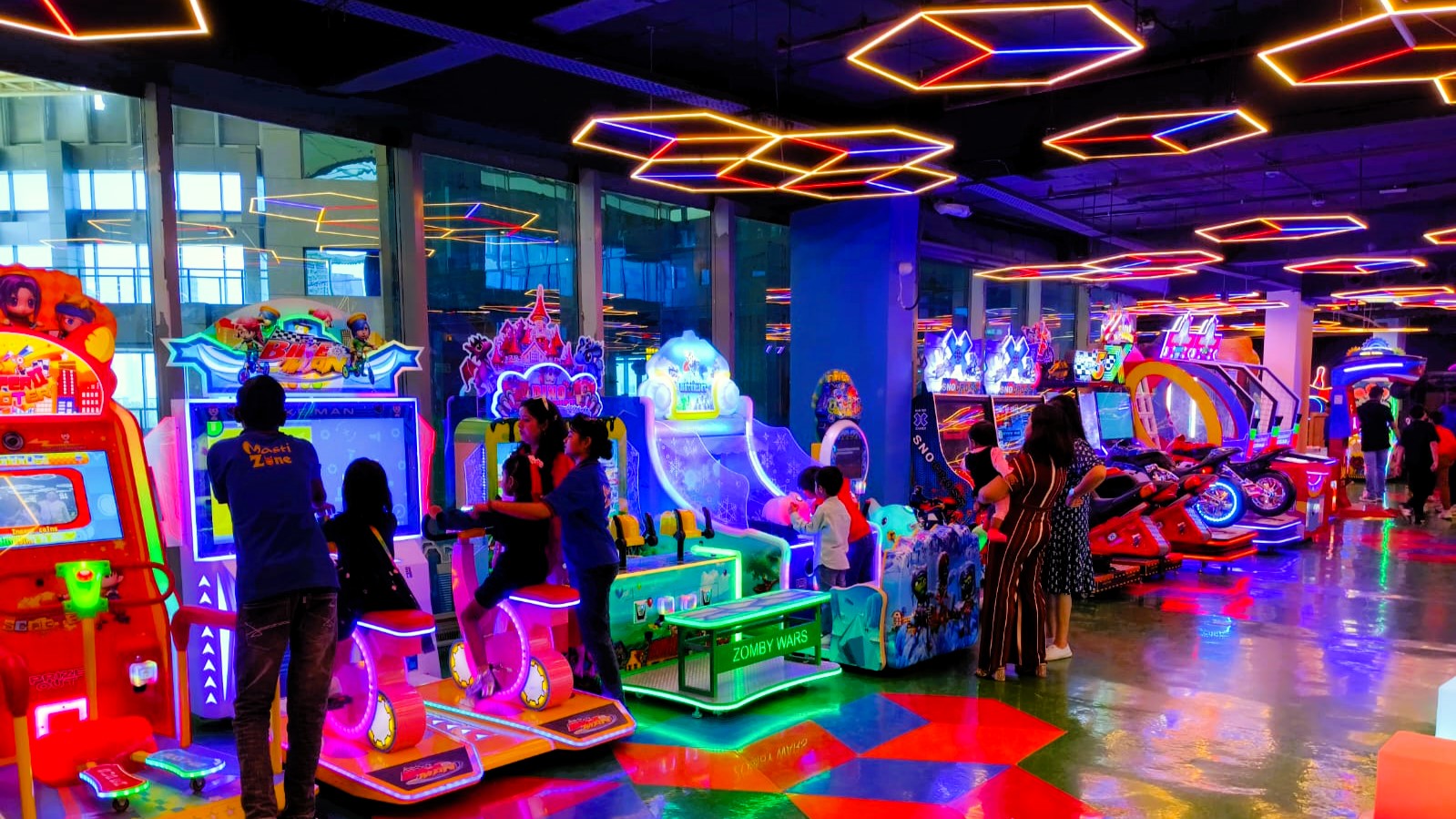
Arcade games glow with a different magic, one stitched with nostalgia. For adults, the blinking lights and rhythmic sounds awaken corridors of memory, recalling afternoons when time seemed infinite and joy uncomplicated. For children, those same machines shimmer as discoveries waiting to be mastered. Between the two unfolds a quiet exchange: “This was my favourite game,” an elder might say, and suddenly history is not distant but animated, present, shared.
In an age where families gather under one roof only to remain separated by individual screens, thoughtfully designed indoor spaces offer something increasingly rare, like undivided attention. Places like Masti Zone emerge as contemporary courtyards, echoing the communal spaces of earlier generations where stories, laughter, and companionship flowed without interruption. Here, engagement replaces distraction as here generations participate together.
The significance of such intergenerational bonding extends beyond sentimentality. Emotional research consistently underscores its profound impact. Children gain perspective and emotional security from meaningful interactions with elders. Grandparents, in turn, experience renewed relevance and inclusion. Parents witness the living thread of continuity, i.e., the quiet assurance that values, affection, and shared rituals are being transmitted through lived moments.
Within the hum of bumper cars colliding in cheerful chaos, or in the steady encouragement offered near a climbing wall, something subtle and enduring takes root. A bridge of shared laughter, patient guidance, and collective celebration is built. Anchored in play, it spans decades effortlessly, reminding every family that while time may differentiate them, joy remains beautifully, reassuringly timeless.